Supply Chain Digital Transformation: Roadmap & Technologies
What Is Supply Chain Digital Transformation?
Supply chain digital transformation is far more than a collection of IT projects. It’s a fundamental redesign of how organizations plan, execute, and collaborate across the entire supply chain using digital technologies.
At its core, digital supply chain transformation means embedding technologies like cloud-based supply chain management platforms, IoT sensors, artificial intelligence, machine learning, and advanced analytics across every function—from supply chain planning and sourcing to manufacturing, logistics, and after-sales support.
The difference between digitization and true transformation is the difference between scanning documents and reimagining your entire business model.
Basic digitization involves converting paper records to digital formats or emailing spreadsheets between departments. True transformation creates real-time, event-driven decision-making, autonomous workflows, and predictive scenario planning that fundamentally changes how supply chain operations function.
The building blocks of a modern digital supply chain include:
Component | Function |
|---|---|
Control towers | Unified visibility across suppliers, inventory, and shipments |
Digital twins | Virtual replicas of physical assets for simulation and testing |
AI-driven demand forecasting | Predictive models that align historical data with market trends |
Network design simulators | Tools for optimizing distribution and sourcing strategies |
Integrated TMS/WMS | Connected transportation and warehouse management systems |
In this model, data becomes the central asset. Instead of reactive firefighting when supply chain issues emerge, organizations gain predictive and prescriptive capabilities that anticipate problems before they impact customer satisfaction.
Why Supply Chain Digital Transformation Is Now Essential (2024–2028)
The urgency behind supply chain digital transformation isn’t theoretical. Since 2020, a cascade of real disruptions has reshaped how supply chain organizations view digital capabilities: COVID-19 shutdowns, the 2021 Suez Canal blockage, the 2022 Ukraine conflict, Red Sea attacks in 2023–2024, and persistent inflation spikes.
These events exposed fundamental weaknesses in traditional supply chain models:
Limited visibility beyond tier-1 suppliers left companies blind to upstream risks
Slow manual planning cycles couldn’t adapt to rapid demand swings
Lack of scenario planning meant organizations had no playbook for disruptions
Siloed data across business systems prevented coordinated responses
Rising customer expectations add another layer of pressure. Same-day and next-day delivery, real-time order transparency, and sustainable product sourcing have moved from competitive differentiators to baseline customer demands. Meeting these expectations requires real-time tracking, predictive ETAs, and dynamic fulfillment optimization—none of which traditional supply chains can deliver.
Regulatory and ESG drivers are equally demanding. The EU’s Corporate Sustainability Reporting Directive (CSRD) takes effect for large companies starting in 2024. Scope 3 emissions reporting requirements are expanding. Digital Product Passport initiatives in sectors like batteries and textiles will require companies to digitize data across the entire product lifecycle.
The competitive case is equally compelling. Research from MIT’s Center for Transportation and Logistics indicates that digitally transformed supply chains can halve process costs and boost revenue by 20% through enhanced forecasting, reduced lead times, and automated efficiencies. For complex supply chains operating on thin margins, inaction is no longer a neutral choice—it’s a competitive disadvantage.
Core Technologies Powering Digital Supply Chains
Transformation doesn’t start with buying tools. But specific technologies repeatedly appear in successful digital transformation initiatives, and understanding them helps supply chain managers make informed decisions.
Cloud-based platforms and integration architectures form the foundation. Modern SCM platforms like Oracle Fusion Cloud, Kinaxis, or SAP Integrated Business Planning break legacy silos by centralizing data across procurement, manufacturing, and inventory management. API-first architectures enable real-time data exchange between previously disconnected business operations—connecting ERPs with warehouse management systems, transportation platforms, and supplier portals.
The data and analytics stack turns raw information into actionable intelligence. This includes data lakes and warehouses for storage, real-time streaming from telematics and sensor feeds, and advanced data analytics for forecasting, inventory optimization, and anomaly detection. Predictive analytics enables supply chain leaders to move from reacting to problems toward anticipating them.
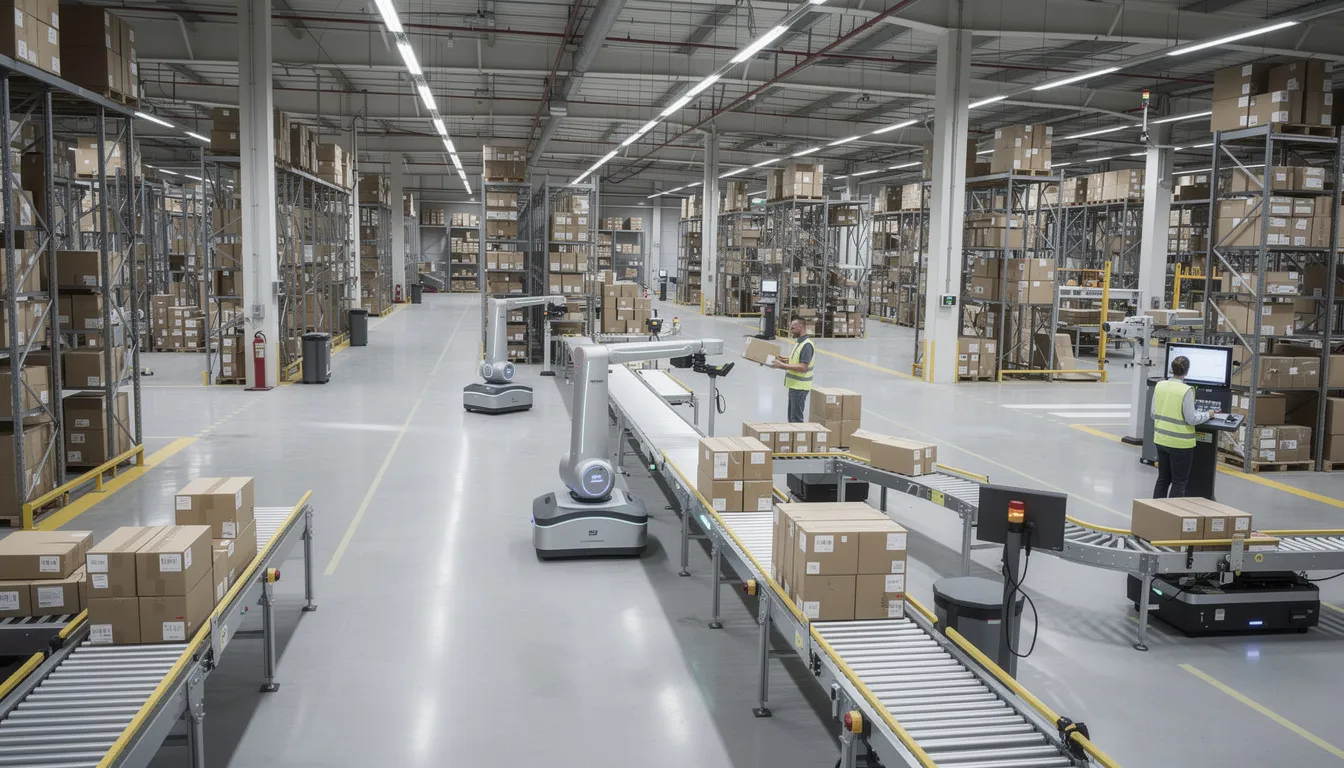
Operational technologies transform physical supply chain processes. IoT sensors on pallets, containers, and trucks provide real time data on location, temperature, and condition. RFID and smart tags enable automated inventory counts. Robotics and cobots handle picking and packing in warehouse operations, while autonomous mobile robots (AMRs) optimize material flow.
Emerging technologies for 2024–2028 include:
Technology | Application |
|---|---|
Private 5G and satellite connectivity | Real-time data from remote sites and moving assets |
Digital twins | Virtual testing of factory and warehouse changes before implementation |
Blockchain | Immutable traceability and supplier performance records |
Edge computing | Faster IoT processing for time-sensitive decisions |
Generative AI | Scenario simulation and natural language interfaces for planners |
These technologies aren’t abstract—they connect to concrete use cases. Cold-chain monitoring uses IoT sensors to maintain product integrity. Predictive maintenance prevents equipment failures before they halt production. Real-time ETA updates improve customer service and warehouse labor planning.

Top Priority Use Cases and Transformation Areas
Trying to digitize everything simultaneously is a recipe for failure. Successful supply chain digital transformation programs focus on a few high-impact use cases that deliver measurable value and build organizational momentum.
Demand and Supply Planning
AI and machine learning have transformed demand forecasting from a spreadsheet exercise into a dynamic, data-driven discipline. Modern tools analyze historical data alongside external signals—weather patterns, social media trends, economic indicators—to generate more accurate predictions.
Promotion forecasting helps retailers and CPG companies anticipate demand spikes. Scenario planning allows supply chain managers to simulate disruptions (port closures, supplier failures, demand surges) and develop contingency plans before crises hit. The result: fewer stockouts, less excess inventory, and faster responses to market changes.
Warehouse and Fulfillment Modernization
Traditional warehouse operations struggle with labor constraints and growing volume demands. Smart WMS platforms combined with robotics, vision systems, and augmented reality picking can dramatically increase throughput without expanding physical footprints.
Robotic process automation handles repetitive tasks like inventory counts and order verification. AMRs optimize pick paths and reduce worker travel time. Vision systems verify shipments and catch errors before packages leave the dock.
Transportation and Last-Mile Improvements
Transportation typically represents one of the largest costs in supply chain operations. Route optimization algorithms, real-time tracking, and dynamic carrier selection reduce cost-per-delivery while improving delivery reliability.
Customer-facing tracking apps turn logistics data into competitive advantage, providing the transparency that modern consumers expect. Integration with traffic data and weather feeds enables proactive adjustments to delivery schedules.
Supplier Collaboration and Multi-Tier Visibility
Global supply chains depend on supplier networks that often extend three or four tiers deep. Digital supplier portals, shared forecasts, and quality data sharing create visibility beyond the immediate tier-1 relationship.
Digital onboarding accelerates new supplier integration. Automated risk monitoring flags potential issues—financial distress, compliance violations, capacity constraints—before they impact your operations.
ESG and Sustainability Use Cases
Digital tools are essential for meeting 2025–2030 emissions reduction targets. Carbon tracking per shipment, optimized load utilization, and reverse logistics for returns all depend on accurate data collected across the supply chain.
Network modeling tools help companies compare the carbon footprint of alternate sourcing locations, transportation modes, or inventory strategies before committing to changes.
Step-by-Step Digital Transformation Roadmap
Supply chain digital transformation is a multiyear journey—typically three to five years for comprehensive programs—not a one-time IT project. Organizations that treat it as a series of discrete phases with clear milestones achieve better results than those pursuing “big bang” implementations.
Step 1: Assess and Diagnose
Before building anything new, understand what you have. This phase involves:
Mapping current supply chain processes from end to end
Cataloging existing systems and data sources
Identifying pain points (manual order promising, limited visibility, slow planning cycles)
Benchmarking performance against industry standards and key performance indicators
Documenting data quality issues and integration gaps
The assessment reveals where manual processes create bottlenecks, where data management gaps prevent visibility, and where current systems can’t support future requirements.
Step 2: Define Vision and Value Case
With a clear picture of current state, define what the future should look like. This means:
Setting a 2026–2028 target state for your overall supply chain
Selecting 3–5 priority use cases based on impact and feasibility
Quantifying expected benefits: service level improvements, cost-to-serve reductions, inventory turn increases, CO₂ reduction
Building a supply chain strategy that aligns with broader business objectives
The strongest value cases combine hard savings (labor, freight, inventory reduction) with strategic benefits (resilience, customer satisfaction, speed-to-market).
Step 3: Design Architecture and Data Foundation
Technology decisions should follow strategy, not precede it. This phase establishes:
A single source of truth for supply chain data across the entire supply chain ecosystem
Data governance frameworks defining ownership, quality standards, and access controls
Integration patterns (APIs, iPaaS platforms) connecting legacy and modern systems
Cloud versus hybrid deployment decisions based on security, latency, and cost requirements
Getting data management right at this stage prevents costly rework later.
Step 4: Execute in Waves
Rather than attempting organization-wide rollouts, successful programs execute in waves:
Start with pilots in a single distribution center, product line, or region
Use agile sprints with clear deliverables and feedback loops
Measure results against predefined KPIs
Iterate based on learnings before scaling
Roll successful solutions to other plants, countries, or business units
This approach limits risk while building organizational confidence and capability.
Step 5: Optimize and Embed
Digital transformation doesn’t end with go-live. Sustainable programs:
Institutionalize continuous improvement processes
Retrain planners and supply chain managers to use advanced digital tools
Establish centers of excellence that spread best practices
Periodically revisit the roadmap as new technologies mature
Track operational efficiency gains and adjust targets

Key Challenges and How to Overcome Them
Technology selection is often the easier part of digital supply chain transformation. Most programs struggle with organizational change, data cleanup, and process redesign—the “people and process” side of transformation.
Resistance to Change
Frontline planners and warehouse operations teams often fear job loss or struggle with new complexity. Manual processes they’ve used for years feel comfortable, even when inefficient.
Overcoming resistance requires:
Early communication about transformation goals and benefits
Involving frontline staff in design sessions to capture their expertise
Celebrating quick wins that demonstrate value
Providing clear career paths in the new digital environment
Skills and Talent Gaps
Supply chain organizations face significant shortages in data analytics, AI, advanced planning, and data management expertise. These skills barely existed in traditional supply chain roles.
Address talent gaps through:
Structured upskilling programs for existing staff
Partnerships with vendors and consultants to transfer knowledge
Targeted hiring for critical roles (data engineers, analysts)
Building relationships with universities and training programs
Legacy Systems and Integration Complexity
Many organizations run 20-year-old ERPs, homegrown planning tools, and dozens of disconnected spreadsheets. Integrating these with modern platforms is technically complex and expensive.
Practical approaches include:
API-first strategies that wrap legacy systems with modern interfaces
Middleware and iPaaS platforms that manage data flow between systems
Staged migrations (e.g., phased SAP S/4HANA projects through 2027)
Prioritizing integration of highest-value data first
Data Quality, Governance, and Security
Dirty master data—inaccurate product dimensions, outdated supplier information, inconsistent location codes—undermines even the best planning tools. Cybersecurity vulnerabilities in interconnected systems create new risks.
Tackle these issues with:
Master data management (MDM) initiatives to clean and standardize data
Clear governance frameworks defining ownership and quality standards
Modern security practices: Zero Trust architecture, MFA, network segmentation
Regular audits of data quality and access controls
Investment and ROI Concerns
Digital transformation initiatives require significant investment, and stakeholders want confidence that the money is well spent.
Build credible business cases by:
Combining hard savings (labor, freight, inventory) with soft benefits (resilience, customer satisfaction)
Starting with focused pilots that prove value before global rollouts
Tying funding to milestone achievements
Reporting transparently on results versus projections
Green and Resilient Supply Chains Through Digitalization
Resilience—the ability to absorb shocks and recover quickly—and sustainability—reducing environmental impact—increasingly share the same digital foundations. Investments that improve one typically enhance the other.
Real-time visibility and analytics reduce waste across multiple dimensions. Fewer expedited shipments cut both cost and emissions. Better load consolidation means fewer trucks on the road. Reduced safety stocks lower storage costs and the energy needed to maintain warehouses. More accurate production planning decreases material waste and energy consumption.
Regulatory pressure is accelerating. CSRD disclosures began for large EU companies in 2024, with scope expanding through 2025–2026. Scope 3 emissions reporting—covering supply chain data up and down stream—is becoming standard for large enterprises. Digital Product Passport pilots in batteries and textiles will require cradle-to-grave data tracking.
Leading companies are using digital tools to achieve ambitious sustainability targets:
Initiative | Digital Enabler | Target |
|---|---|---|
Route optimization | AI-powered TMS | 15–25% reduction in transportation emissions |
Network redesign | Digital twin simulation | Optimal DC locations for carbon and cost |
Load consolidation | Real-time visibility platforms | 10–20% fewer partial shipments |
Packaging optimization | Advanced analytics | Material reduction while maintaining protection |
Digital twins and network modeling tools enable “what-if” analysis before making physical changes. Supply chain organizations can simulate the emissions impact of shifting production to a new country, switching transportation modes from air to ocean, or adjusting inventory policies—all before committing capital.
Real-World Examples of Supply Chain Digital Transformation
Abstract concepts become concrete when illustrated through real implementations. These examples show how different industries are applying digital transformation principles.
E-Commerce and Retail Giants
Companies like Amazon have built entire business models on digital supply chain capabilities. Machine learning forecasting predicts demand at the SKU-location level. Robotics and autonomous systems handle picking and packing in fulfillment centers. Cloud logistics platforms coordinate thousands of delivery partners.
The result: one-to-two-day shipping as a standard expectation, reshaping customer expectations across entire industries.
Global CPG and FMCG Manufacturers
Major consumer goods companies are using advanced planning tools to maintain service levels while pursuing aggressive sustainability targets. One leading manufacturer has committed to 100% reusable or recyclable packaging by 2025 while simultaneously improving demand forecasting accuracy.
The integrated approach—combining supply chain efficiency with sustainability—demonstrates that these goals aren’t mutually exclusive.
Big-Box Retailers
Large retailers are combining IoT sensors for energy management, advanced inventory analytics, and supply chain visibility platforms. These integrated supply chain approaches improve on-shelf availability (boosting sales) while reducing energy consumption and transportation costs.
One major retailer achieved significant emissions reductions while improving in-stock rates—proof that operational efficiency and sustainability can advance together.
Automotive and Manufacturing
Automotive manufacturers and their logistics partners face particularly complex supply chains with thousands of components, global sourcing, and just-in-time requirements. Companies like Gefco (now part of CMA CGM) have migrated from fragmented spreadsheets to integrated cloud-based warehouse and transportation management systems.
The transformation eliminated manual processes for shipment tracking and provided end-to-end visibility across the manufacturing operation—from supplier shipments through finished vehicle delivery.

The Future of Digital Supply Chains
Looking toward 2026–2030, digital supply chains will evolve from decision-support tools into autonomous, interconnected networks that operate with minimal human intervention for routine decisions.
AI will move from supporting planners to serving as a co-pilot—automatically generating scenarios, recommending mitigation actions during disruptions, and learning from outcomes to improve future predictions. Generative AI will enable natural language interfaces where supply chain managers can ask questions and receive actionable insights without specialized analytics skills.
Digital twins will extend from individual facilities to entire end-to-end networks. Organizations will virtually test new suppliers, inventory policies, or distribution center locations before committing physical resources. The ability to simulate hundreds of scenarios in minutes will transform how supply chain strategy decisions are made.
Hyperautomation—combining robotic process automation, machine learning, and workflow tools—will handle complex, cross-functional tasks. Order promising, freight auditing, exception management, and supplier performance tracking will operate autonomously, with humans focusing on strategic decisions and edge cases.
New technologies will continue emerging. Quantum computing may eventually revolutionize optimization problems. Autonomous vehicles will transform transportation economics. Advanced materials and sustainable packaging will create new supply chain requirements.
The future belongs to organizations that treat digital transformation as a continuous capability, not a finished project.
The companies that thrive will be those that continuously adapt, refresh their data foundations, invest in their people, and maintain the organizational agility to incorporate new digital technologies as they mature.
Final Takeaway
Supply chain digital transformation is now central to competitiveness, resilience, and sustainability. The dynamic environment of global supply chains—shaped by geopolitical uncertainty, climate pressures, and rising customer expectations—demands capabilities that traditional supply chain models simply cannot provide.
The winning formula blends clear business objectives, strong data foundations, focused use cases, and deliberate change management. Technology alone doesn’t create competitive advantage—it’s the combination of advanced technologies with skilled people and redesigned processes that delivers results.
Identify one or two high-impact pilots you can launch within the next six to twelve months. Whether it’s demand planning modernization, control tower visibility, or last-mile optimization, starting somewhere is better than waiting for the perfect plan.
Digital supply chain transformation is a continuous journey requiring experimentation, learning, and iteration. The organizations that embrace this mindset will lead their industries through whatever disruptions the next decade brings.
FAQ: Supply Chain Digital Transformation
1. How long does a typical supply hain digital transformation take?
Expect pilot results within 6–12 months, with broader transformation spanning 3–5 years for comprehensive programs. The timeline varies based on starting maturity, scope, and organizational readiness. Most successful programs follow a phased approach—proving value with focused initiatives before scaling across the entire business.
2. What is the minimum starting point if our data is a mess?
Start with data cleansing and master data management for your highest-priority use case—often demand planning or inventory visibility. You don’t need perfect data everywhere to begin. Establish a basic integrated data layer connecting your core systems (ERP, WMS, TMS), implement governance processes to maintain quality, and improve incrementally as you expand scope.
3. How much should we budget for supply chain digital transformation?
Investment scales dramatically with scope. Focused pilots might require mid-six-figure investments. Comprehensive enterprise-wide transformations can reach tens of millions over multiple years. The key is phased funding tied to milestones—proving value at each stage before committing additional resources. Many organizations start with $500K–$2M for initial pilots and scale based on demonstrated ROI.
4. Do small and mid-sized companies really need digital supply chain transformation?
Yes, though the approach and toolset differ. SMBs can leverage cloud SCM platforms with lower upfront costs, implement better forecasting using accessible AI tools, and adopt basic automation to improve efficiency. The principles remain the same—better visibility, data-driven decisions, and streamlined processes—even if the scale and complexity differ from global enterprises.
5. What’s the biggest mistake companies make in their digital transformation journey?
Focusing too heavily on technology while neglecting change management and data quality. Organizations often underestimate resistance from internal stakeholders and the effort required to clean and integrate data from legacy systems. Successful transformations invest as much in training, communication, and process redesign as they do in software and platforms.
What should you do next?
Thanks for reading till the end. Here are 3 ways we can help you automate your business:

Do better workflow automation with Cflow
Create workflows with multiple steps, parallel reviewals. auto approvals, public forms, etc. to save time and cost.

Talk to a workflow expert
Get a 30-min. free consultation with our Workflow expert to optimize your daily tasks.

Get smarter with our workflow resources
Explore our workflow automation blogs, ebooks, and other resources to master workflow automation.