Audit Process
What Is the Audit Process?
The audit process is a systematic approach to examining financial statements, operations, or compliance for a defined period. Whether you’re looking at FY 2024 or any other reporting period, this evidence-based examination follows established auditing standards such as GAAS (Generally Accepted Auditing Standards) or ISA (International Standards on Auditing) to provide assurance that management’s representations are accurate and complete.
An audit process applies to different types of audits—financial statement audits, internal audits, operational audits, and compliance audits—but they all share common phases: planning, execution, reporting, and follow up. The specific procedures within each phase vary based on the audit objectives and scope, but the fundamental structure remains consistent across audit types and industries.
External auditors are independent firms that issue opinions for shareholders, regulators, and other external stakeholders. They operate under strict independence requirements and focus on determining whether financial statements present fairly the organization’s financial position. Internal auditors, by contrast, report to the audit committee and senior management, focusing on process improvement, risk management, and ensuring compliance with applicable laws and internal policies.
The output of an external financial statement audit is typically an audit opinion attached to the annual report—a formal conclusion about whether the financial statements are free from material misstatement. Internal audits usually produce detailed reports with audit findings, root cause analysis, and action plans for remediation.
Consider how this works in practice: A mid-size manufacturing company preparing for its FY 2024 audit would engage external auditors who start planning in Q3 2024, conduct interim testing in Q4, and complete final fieldwork after the books close in early 2025. Simultaneously, the internal audit function might be running parallel reviews of specific processes like inventory management or cybersecurity controls, feeding relevant information to both management and the external audit team.

Importance of a Structured Audit Process
Following a well-defined audit process matters for accuracy, regulatory compliance, and stakeholder confidence. When auditors follow a systematic approach with clearly defined audit procedures, they can provide assurance that findings are based on sufficient, reliable evidence rather than assumptions or incomplete reviews.
The audit process helps detect material misstatements, fraud indicators, control weaknesses, and policy non-compliance before they impact investors or regulators. By identifying areas of concern early, organizations can take corrective actions before issues escalate into restatements, regulatory penalties, or reputational damage. This independent assessment gives boards and shareholders confidence that financial reporting reflects economic reality.
For public companies and regulated industries—banks, insurers, healthcare providers—a reliable audit process is essential for meeting statutory filing deadlines and avoiding penalties. The SEC, PCAOB, and industry-specific regulators expect timely, accurate financial statements supported by robust audit evidence. Missing these deadlines or submitting deficient filings can trigger enforcement actions and damage investor trust.
A poor or rushed audit process creates real business risk. Companies that cut corners during the 2022–2023 audit cycles—skipping risk assessment procedures, accepting insufficient evidence, or failing to test key controls—often found themselves facing restatements, SEC comment letters, or regulatory reviews that consumed far more time and resources than a thorough initial audit would have required.
Phase 1: Audit Planning
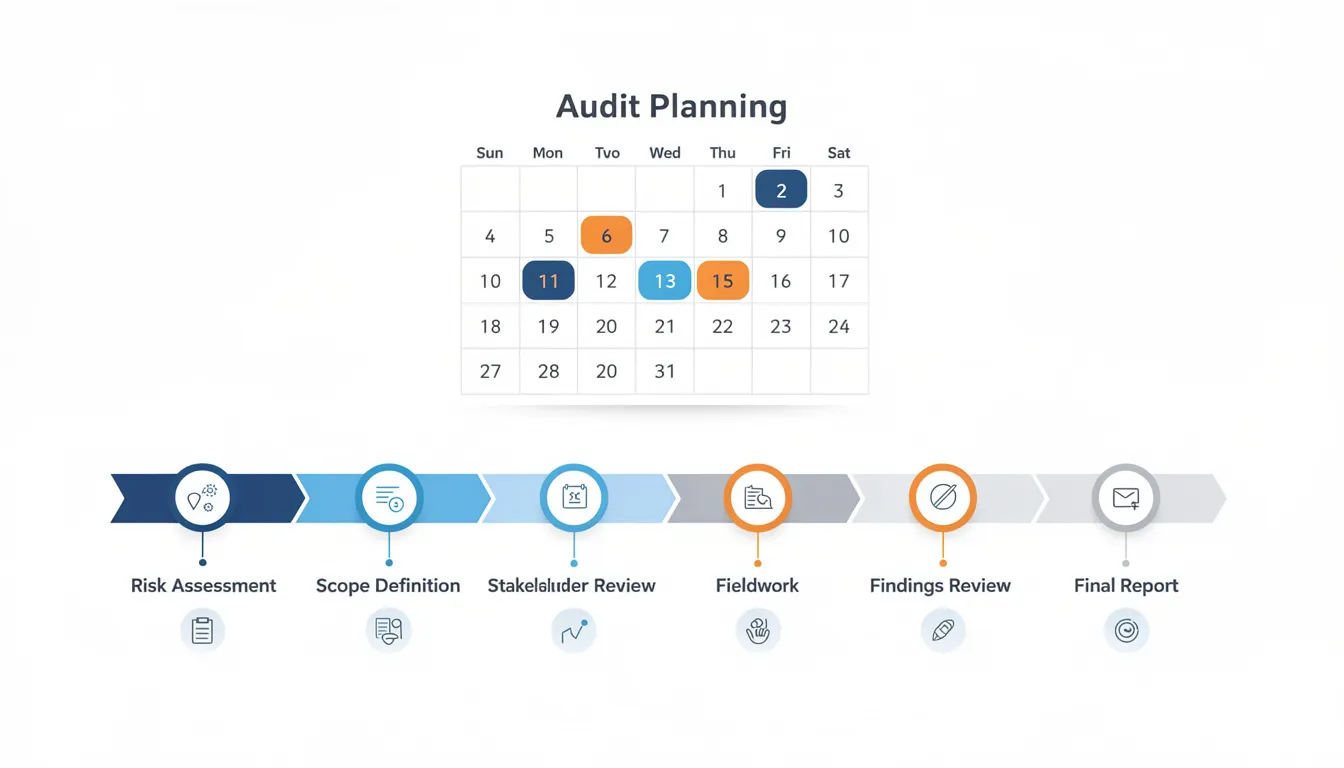
The planning phase typically starts several months before the audit period ends—often in Q3 for a 31 December year-end—and establishes the objectives, timelines, and resources needed for an effective engagement. This is where auditors lay the groundwork that determines how smoothly the rest of the process will run.
During planning, auditors gain an understanding of the entity, its industry, IT landscape, and any prior-year issues through preliminary meetings, document reviews, and walkthroughs of key processes. They review background information including organizational charts, financial records from prior periods, and relevant information about significant transactions or changes during the current year.
The planning phase should produce concrete outputs: an approved audit plan, a high-level timetable, a list of key contacts, and a preliminary materiality threshold. These deliverables guide the audit team throughout fieldwork and ensure everyone—auditors and client staff alike—understands expectations and deadlines.
Effective planning reduces last-minute audit requests and helps management allocate staff time during busy periods like year-end close. When auditors identify what they need upfront, controllers and accounting teams can prepare documentation in advance rather than scrambling during fieldwork.
Defining Audit Scope and Objectives
Scope definition sets the boundaries of the audit: which entities, locations, systems, and periods will be examined. For a multinational corporation, this might mean the parent company plus two major subsidiaries for FY 2024, while smaller organizations might have a straightforward single-entity scope.
The objectives of the audit should be specific and measurable. For an external financial statement audit, the primary objective might be “express an opinion on the consolidated financial statements in accordance with IFRS.” For an internal audit of revenue processes, the objective could be “assess the effectiveness of revenue recognition controls under ASC 606 and identify opportunities for process improvement.”
Common scope elements include:
Financial statements (balance sheet, income statement, cash flows, equity)
Internal controls over financial reporting
IT general controls supporting financial systems
Key business cycles: purchases, payroll, revenue, inventory
Regulatory compliance areas specific to the industry
Transactions during a defined period (e.g., 1 January 2024 through 31 December 2024)
Scope decisions also consider materiality levels, complexity, recent acquisitions, and any known problem areas from previous audits. If last year’s audit identified significant deficiencies in accounts payable processing, this year’s scope might include expanded testing in that area to verify that corrective actions were effectively implemented.
Risk Assessment During Planning
Risk assessment identifies where material misstatements or significant process failures are most likely, guiding the intensity of testing. This step ensures the audit team focuses effort where it matters most rather than spreading resources evenly across all areas.
Typical risk assessment activities include:
Reviewing prior-year audit findings and management responses
Analyzing preliminary financial data for FY 2023–2024, looking for unusual trends
Interviewing management about major changes in operations, systems, or personnel
Mapping key risks: revenue cut-off, inventory valuation, IT security, new accounting standards
Evaluating the overall control environment and tone at the top
Auditors consider three types of risk when developing their approach. Inherent risk reflects the susceptibility of an assertion to misstatement before considering controls—for example, complex estimates like goodwill impairment carry higher inherent risk than straightforward cash accounts. Control risk is the risk that internal controls won’t prevent or detect a misstatement. Detection risk is the risk that audit procedures won’t catch an existing error.
Consider a company with significant crypto-asset holdings: the volatility of these assets, combined with evolving accounting guidance, creates high inherent risk for valuation. The audit team would likely plan more extensive procedures for this area, potentially including valuation specialists and expanded analytical procedures.
Higher-risk areas lead to more detailed procedures, larger samples, and possibly involvement of specialists in IT, tax, or valuation. Lower-risk areas might receive reduced testing when strong controls are operating effectively.
Developing the Audit Strategy and Plan
The audit strategy converts assessed risks into a practical audit program: what will be tested, when, how, and by whom. This document becomes the roadmap that guides day-to-day execution during fieldwork.
A written audit plan typically addresses:
Element | Description |
|---|---|
Timing | When interim vs. year-end work occurs |
Reliance on internal audit | How the internal audit function’s work will be leveraged |
Data analytics | Which processes will use automated testing tools |
Sample sizes | Planned testing quantities for each significant area |
Specialist involvement | When IT auditors, valuation experts, or tax professionals join the team |
Key deadlines | Milestones aligned with filing requirements |
For complex areas like revenue recognition, lease accounting, or estimates such as impairment tests as of 31 December 2024, auditors may plan specialized procedures or bring in experts. A manufacturing company with significant long-term contracts might require detailed testing of percentage-of-completion accounting, while a real estate firm would need focused procedures on lease modifications under ASC 842.
The strategy must be documented and agreed with the client’s leadership. For public companies, key elements are communicated to the audit committee before fieldwork begins, ensuring governance oversight and alignment on scope and objectives.

Phase 2: Fieldwork and Evidence Collection
Fieldwork—often called the execution phase or on-site work—is where auditors perform tests, gather evidence, and validate management’s assertions about the financial statements and supporting processes. This is typically the most resource-intensive stage of the audit.
Fieldwork may occur partially during the year (interim testing) and partially after year-end close when final balances for the fiscal year are available. Interim testing often focuses on transactions and controls, while year-end testing emphasizes balance sheet accounts and period-end procedures.
Auditors use a mix of tests of controls and substantive procedures, often aided by audit software, data extraction tools, and secure client portals for exchanging documentation. The audit team coordinates with client staff through a PBC (Prepared by Client) list that specifies exactly what documentation is needed and when.
Clear communication during fieldwork keeps the engagement on schedule. Daily status meetings, trackers of open items, and agreed turnaround times for audit requests help both sides manage workload. When an auditor identifies issues during fieldwork, early discussion with management allows time for resolution before the closing meeting.

Gathering and Analyzing Audit Evidence
Audit evidence includes documents, electronic records, confirmations, recalculations, and observations that support conclusions about whether the financial statements are fairly presented. The quality and sufficiency of this evidence determine the reliability of the overall assessment.
Common procedures for gathering evidence include:
Inspecting invoices, contracts, and supporting documentation
Reconciling subledgers to the general ledger for the FY 2024 trial balance
Confirming balances with banks, customers, and vendors
Reperforming key calculations such as depreciation schedules or accruals
Observing physical processes like inventory counts
Reviewing departmental records and transaction logs
Not all evidence carries equal weight. A direct bank confirmation is stronger evidence than an internal spreadsheet because it comes from an independent third party. Similarly, original invoices are more reliable than summaries prepared by client staff. Auditors must evaluate both the relevance and reliability of each piece of evidence they gather.
Data analytics increasingly allow auditors to perform full-population testing rather than relying solely on samples. For journal entry testing, audit software can analyze every entry posted during FY 2024, flagging unusual characteristics like round-dollar amounts, out-of-hours postings, or entries made by individuals who don’t normally have that access. This transaction testing approach can identify anomalies that sampling might miss.
Consider inventory existence testing: auditors attend the year-end physical count, observe the client’s procedures, perform test counts, and trace selected items to final inventory records. This combination of observation, inspection, and reperformance provides strong evidence that inventory reported on the balance sheet actually exists.
Testing Internal Controls
Control testing assesses whether key internal controls over financial reporting and the organization’s operations are properly designed and operating effectively throughout the year. Strong controls reduce the risk of material misstatement and can allow auditors to reduce substantive testing.
Auditors select key controls over significant processes and test samples of their operation. Common areas for control testing include:
Approval workflows for vendor payments and purchase orders
Three-way match for purchases (PO, receiving report, invoice)
User access reviews for the ERP system and financial applications
Reconciliation procedures for bank accounts and intercompany balances
Authorization controls over journal entries and period-end adjustments
Testing internal controls involves two distinct evaluations. Design effectiveness asks whether the control is logically capable of preventing or detecting errors if it operates as intended. Operating effectiveness asks whether it actually worked as intended throughout the period—not just on day one, but consistently across FY 2024.
For example, auditors might test a sample of 25 purchase orders to verify proper approval under company policy. They would examine each PO for evidence that the appropriate manager signed off before the order was placed, that dollar thresholds were respected, and that documentation was complete. If three of those 25 show missing approvals, the control has a failure rate that must be evaluated against the overall population.
When controls are effective, auditors may reduce the extent of detailed substantive testing in that area. When controls fail or are poorly designed, the audit team must expand substantive procedures to compensate, often increasing sample sizes and performing additional analytical procedures.
Audit Sampling Techniques
Sampling allows auditors to draw conclusions about large populations—thousands of sales transactions in 2024, for example—by testing a smaller number of items. This approach is practical and accepted under auditing standards, though it introduces sampling risk.
Statistical sampling uses mathematical techniques to select items randomly and calculate confidence levels about the results. Non-statistical or judgmental sampling relies on auditor judgment to select items that are representative of the population, often focusing on higher-risk transactions or amounts above certain thresholds.
Sampling Approach | When to Use | Example |
|---|---|---|
Statistical | Large homogeneous populations, need to quantify sampling risk | Testing 60 invoices from 6,000 sales transactions |
Judgmental | Heterogeneous populations, focus on specific risk characteristics | Selecting all transactions over $100,000 plus a sample of smaller items |
Stratified | Populations with varying risk levels | Testing 100% of items over materiality, sampling smaller items |
When testing 60 invoices out of 6,000, auditors project the results to the entire population. If two invoices show errors totaling $1,500, the projected error across all 6,000 invoices would be calculated and compared against materiality thresholds.
Sampling risk—choosing an unrepresentative sample—is managed through proper design, documentation, and review of methodology. Modern tools can also enable full-population testing in some areas, reducing reliance on traditional sampling where data is accessible and structured. Testing every journal entry rather than a sample of 50 eliminates sampling risk entirely for that procedure.
Phase 3: Evaluation and Audit Reporting
After fieldwork, auditors evaluate their findings, form conclusions for each audit area, and express an overall opinion or set of recommendations. This evaluation phase synthesizes all the work performed into clear, actionable outputs.
This phase includes resolving outstanding questions with management, assessing materiality of identified misstatements, and deciding whether adjustments are needed to the FY 2024 financial statements. Issues identified during fieldwork are discussed with the appropriate level of management, often requiring additional documentation or clarification before conclusions can be finalized.
For external audits, the result is a formal audit opinion—unmodified (clean), qualified, adverse, or disclaimer—based on the nature and significance of any remaining issues. Internal audits typically produce graded findings with risk ratings (high, medium, low) and specific recommendations for remediation.
Timelines during this phase are often driven by statutory filing deadlines. Listed companies typically must file within 60–90 days after year-end, meaning the final audit report must be issued quickly once the year closes. Tight management of open items and clear escalation paths for unresolved issues help meet these deadlines.
Preparing the Audit Report
The audit report is a formal document summarizing scope, methodology, key findings, and the auditor’s overall conclusion for the period under review. This deliverable represents the culmination of all audit work and carries significant weight with stakeholders.
A standard external financial statement audit report includes:
Title: Clearly identifying it as an independent auditor’s report
Addressee: Typically shareholders or the board of directors
Opinion paragraph: Stating whether financial statements present fairly
Basis for opinion: Describing the standards followed and work performed
Responsibilities: Distinguishing management’s responsibilities from auditors’
Key audit matters: For public companies, highlighting significant judgment areas
Internal audit reports follow a different structure, typically including an executive summary for senior leadership, detailed observations with condition-criteria-cause-effect analysis, risk ratings for each finding, root cause analysis, and agreed management action plans with responsible parties and target dates.
Before the final report is issued, a draft audit report is typically shared with management for factual accuracy checks. This gives responsible parties an opportunity to correct any misunderstandings about processes or to confirm that the draft report accurately reflects the current state of controls and transactions.
The final audit report should be clear, neutral in tone, and aligned with applicable standards such as ISA 700 for external reports. Ambiguous language or overly technical jargon reduces the report’s usefulness for boards and audit committee members who need to understand and act on findings.
Communicating Findings and Recommendations
Beyond the formal report, auditors hold closing meetings or exit meetings to walk management and the audit committee through the results. These sessions allow for discussion of nuances that written reports can’t fully capture.
Significant issues—such as control deficiencies, proposed audit adjustments, or indications of fraud—are discussed in detail. The conversation covers not just what was found but why it matters: impact on financial statements, operational risk, compliance exposure, and implications for management’s representations to the board and external stakeholders.
Recommendations should be practical, prioritized by risk, and accompanied by suggested timelines and responsible owners. Rather than vague suggestions like “improve controls,” effective recommendations specify actions: “Controller to implement dual approval on payments exceeding $10,000 by 30 June 2025” or “IT Director to conduct quarterly user access reviews beginning Q2 2025.”
Consider a revenue cut-off issue where testing revealed $250,000 in sales recorded in December 2024 that should have been recognized in January 2025. The entrance meeting at audit kickoff had flagged revenue as a focus area. During the closing meeting, auditors would present the finding, explain the root cause (insufficient review of shipping documentation), propose an adjustment to the financial statements, and recommend process changes—such as enhanced month-end cut-off procedures and supervisor review of transactions within five days of period-end.
Clear, constructive communication positions the audit as a partner in improvement rather than just a compliance exercise. Management responses to findings should be documented, and auditors evaluate whether proposed corrective actions adequately address the identified risks.
Post-Audit Follow-Up and Continuous Improvement
After the draft report is issued and finalized, management is responsible for implementing corrective actions while auditors—often the internal audit function—perform follow up reviews on an agreed schedule. This stage ensures that audit findings translate into actual improvement.
Follow-up may occur 3–12 months after the audit, checking whether controls were redesigned, staff trained, or systems updated as committed. For significant issues, multiple follow-up reviews might be needed to verify that changes are embedded in day-to-day operations rather than implemented superficially to close the finding.
For external audits, significant unresolved issues or repeat findings are highlighted in subsequent audit planning. If a control deficiency identified in FY 2024 remains unaddressed, the FY 2025 audit strategy will need to account for continued weakness, potentially requiring expanded substantive testing or escalation to the audit committee.
Organizations often maintain an audit issue tracker or remediation log monitored by the audit committee. This tool creates accountability by:
Documenting each finding with owner, target date, and current status
Tracking aging of open items and escalating overdue remediation
Providing regular reporting to governance bodies
Capturing evidence of completed corrective actions
The audit process is cyclical: lessons learned from each engagement feed into future risk assessments and planning. A control weakness identified in 2024, remediated by mid-2025, and verified through follow up review becomes part of the institutional knowledge that shapes the upcoming audit for FY 2025.
Internal vs. External Audit Processes
While internal and external audits share core steps, their objectives, scope, and governance differ significantly. Understanding these distinctions helps organizations coordinate audit services and avoid duplication of effort.
Internal audits are ongoing and risk-based, focusing on process improvement, efficiency, and compliance across the entire business. The internal audit function operates year-round, tackling different areas according to an annual audit plan approved by the audit committee. Internal auditors evaluate not just financial reporting but also operational effectiveness, regulatory compliance, IT security, and strategic risks.
External audits are periodic—typically annual—and focused specifically on issuing an independent opinion on financial statements. External auditors must maintain independence from the organization and follow strict standards regarding conflicts of interest and non-audit services.
The audit process stages look slightly different for each type:
Planning: External auditors focus on financial statement assertions and materiality. Internal auditors develop a risk-based plan covering operational, compliance, and financial areas, often coordinating with external auditors to provide relevant information and avoid redundant testing.
Fieldwork: External auditors emphasize substantive testing of account balances and transactions. Internal auditors may conduct deeper operational reviews, interviewing staff across departments and observing processes in action.
Reporting: External auditors issue a standardized opinion with limited customization. Internal audit reports are tailored to the organization’s needs, with detailed recommendations and agreed management responses.
Follow-up: External auditors note unresolved issues for next year’s planning. Internal auditors actively track remediation and perform follow-up review to verify that corrective actions address the underlying control weaknesses.
Internal auditors typically follow the IIA’s International Professional Practices Framework (IPPF), which emphasizes adding value to the organization through assurance and consulting activities. External auditors follow jurisdiction-specific standards: PCAOB for U.S. public companies, ISA for many international engagements, or AICPA standards for non-public entities.
Consider a practical example: During 2024, the internal audit function might conduct a detailed review of cybersecurity controls, testing access management, vulnerability monitoring processes, and incident response procedures. Simultaneously, the external financial audit would address IT general controls that affect financial reporting—user access to the ERP, change management for applications processing transactions—but would not duplicate the operational security review. The internal stakeholders benefit from both perspectives while each audit team maintains its distinct scope and objectives.
Technology and Automation in the Audit Process
Audit teams increasingly leverage audit management software, data analytics platforms, and workflow tools to streamline every phase of the audit process. These technologies enhance efficiency and expand coverage beyond what traditional manual procedures could achieve.
Automation helps with evidence collection through integration with ERP systems like SAP or Oracle, allowing auditors to extract data directly rather than relying on client-prepared reports. Sample selection becomes more rigorous when algorithms identify transactions meeting specific criteria. Monitoring processes can run continuously, alerting auditors to anomalies in real-time rather than waiting for period-end testing.
Practical applications include:
Full-population journal entry testing: Instead of sampling 50 entries, analytics tools can evaluate every entry posted during FY 2024, flagging those with unusual characteristics for targeted review
Robotic process automation (RPA): Reconciling large datasets overnight, comparing vendor invoices to purchase orders across thousands of transactions
Continuous control monitoring: Dashboards tracking key control indicators and alerting when thresholds are exceeded
Secure collaboration portals: Centralizing audit requests, document uploads, and status tracking to reduce email chains and lost files
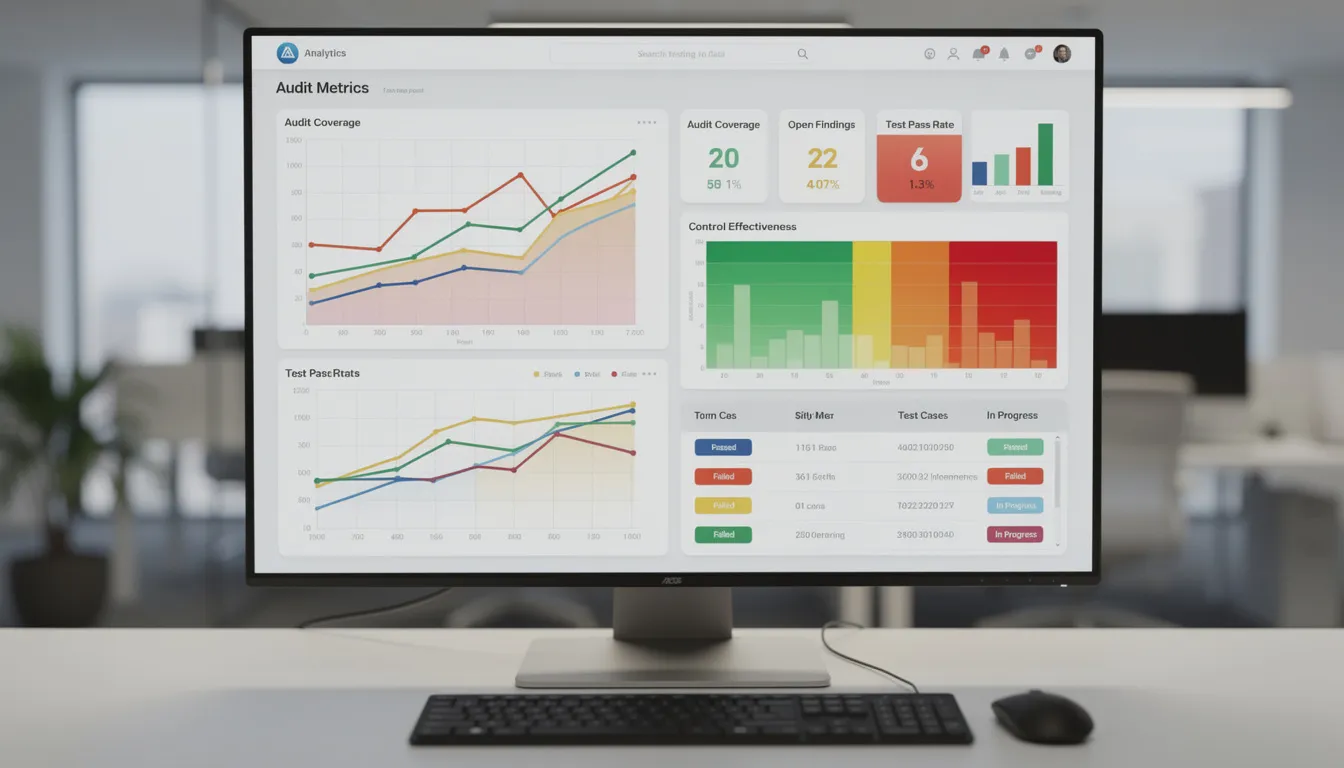
While technology increases efficiency and coverage, auditors still need professional judgment to interpret outliers, evaluate complex estimates, and determine what is material. A data analytics tool might flag 500 unusual journal entries, but the auditor must assess which warrant investigation and whether identified issues represent fraud, error, or legitimate business transactions.
Technology also supports the audit committee and management by providing visual dashboards of audit status, issue aging, and trend analysis. This reporting enhances governance oversight and helps organizations track progress toward resolving audit findings.
Conclusion
The audit process is a repeatable, structured journey from planning through follow-up that, when executed well, enhances transparency, governance, and decision-making. Each phase—scope definition, risk assessment, evidence collection, control testing, reporting, and remediation—builds on the previous to deliver reliable assurance about an organization’s operations and financial position.
Organizations can significantly reduce friction and surprises by preparing early: documenting processes, strengthening internal controls, and clarifying roles before auditors arrive. A well-organized PBC list, current reconciliations, and proactive communication about known issues demonstrate readiness and help the audit team work efficiently.
Both internal stakeholders and external parties benefit when audits are viewed as opportunities for insight and improvement rather than just a compliance requirement. The audit findings and recommendations that emerge from a thorough process provide valuable information for management, boards, and the audit committee—information that supports better risk management and strategic decisions.
As regulations evolve and data volumes grow, companies that invest in robust audit processes and modern tools will be better positioned for 2025 and beyond. The organizations that treat audits as a continuous improvement cycle rather than an annual disruption will find themselves with stronger controls, more reliable financial reporting, and greater confidence from stakeholders who depend on accurate information.
Frequently Asked Questions About the Audit Process
Q: How long does a typical external financial statement audit take from planning to final report?
A: For a calendar-year company with year-end 31 December, planning often begins in Q3 of that year, with interim fieldwork occurring in Q4. Final fieldwork happens in Q1–Q2 of the following year once books are closed, with the most intensive on-site work typically lasting 2–6 weeks depending on size and complexity. The entire cycle from initial planning meetings to issuing the final audit report spans roughly 6–9 months, though the active engagement time is concentrated in specific windows.
Q: How should our company prepare for an upcoming audit to make the process smoother?
A: Start by ensuring account reconciliations are complete and reviewed before auditors arrive. Update key policies and process narratives so they reflect current practices. Address any prior-year issues and document the corrective actions taken. Create a central repository for requested documents based on the PBC list, and assign a primary coordinator to manage audit requests and track deadlines. Having clean, organized records with clear audit trails dramatically reduces back-and-forth during fieldwork.
Q: What is the difference between a review, a compilation, and a full audit?
A: A full audit involves extensive testing—including control evaluation, substantive procedures, and evidence gathering—and provides the highest level of assurance that financial statements are free from material misstatement. A review involves limited analytical procedures and inquiries with management, offering moderate (or “limited”) assurance. A compilation only organizes financial information into statement format without providing any assurance. The audit process is the most rigorous of the three, which is why it’s required for public companies and often mandated by lenders or regulators.
Q: When is it necessary to involve specialists during the audit process?
A: Specialists are typically brought in for complex estimates, sophisticated IT environments, derivative instruments, pension obligations, or unusual transactions. A 2024 acquisition, for instance, might require valuation specialists to assess purchase price allocation. Companies with significant IT complexity might need IT auditors to evaluate general controls. Actuaries evaluate insurance reserves or pension liabilities. Tax professionals review uncertain tax positions. The audit team determines specialist needs during planning based on the complexity and risk of specific areas.
Q: Can the audit process detect all fraud and errors in our organization?
A: No audit can guarantee detection of every error or fraud scheme. The audit process is designed to provide reasonable—not absolute—assurance that financial statements are free from material misstatement. Auditors use sampling, professional judgment, and risk-based procedures, which means some items aren’t examined. Sophisticated frauds involving collusion or management override of controls are particularly difficult to detect. However, a well-performed audit significantly increases the likelihood of detecting material misstatements and creates deterrent effects that reduce fraud risk overall.
What should you do next?
Thanks for reading till the end. Here are 3 ways we can help you automate your business:

Do better workflow automation with Cflow
Create workflows with multiple steps, parallel reviewals. auto approvals, public forms, etc. to save time and cost.

Talk to a workflow expert
Get a 30-min. free consultation with our Workflow expert to optimize your daily tasks.

Get smarter with our workflow resources
Explore our workflow automation blogs, ebooks, and other resources to master workflow automation.